
An unexpected journey: My environmental management placement with Healthy Land & Water
This article was written by Matthew Doyle as a reflection of his time spent at Healthy Land & Water for his university placement.
Throughout my environmental management degree at the University of the Sunshine Coast, I'd come across Healthy Land & Water's work on several occasions when using their catchment reports for assignments examining water quality across South East Queensland. I never imagined I'd eventually complete my placement with that same organisation.
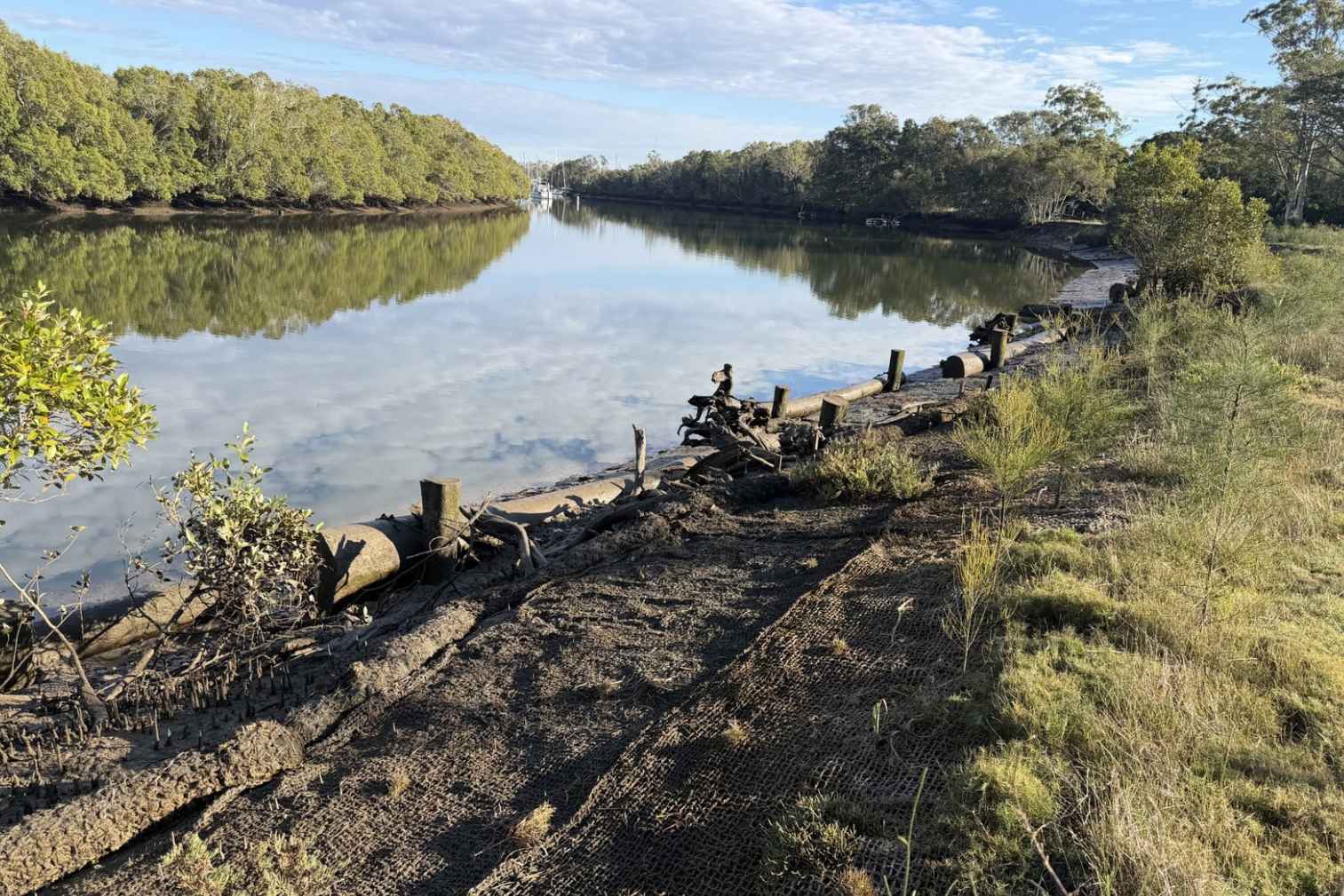
The possibility of that placement first arose during a field trip for my Integrated Environmental Management subject, where Margie Dickson from Healthy Land & Water showed our class the riverbank restoration work along the Caboolture River. What caught my attention was seeing how nature-based engineering could work with the river's natural processes to manage erosion, restore vegetation and improve the surrounding environment. I took the chance to ask Margie about completing my placement with the organisation.
I'm not sure whether it was my enthusiasm or the endless questions I asked that made an impression on her. A few months later, I was back along the Caboolture River, this time working alongside the Land Restoration team. Margie was now my placement supervisor, and I was learning from experienced environmental professionals in the field.
From field trip to fieldwork
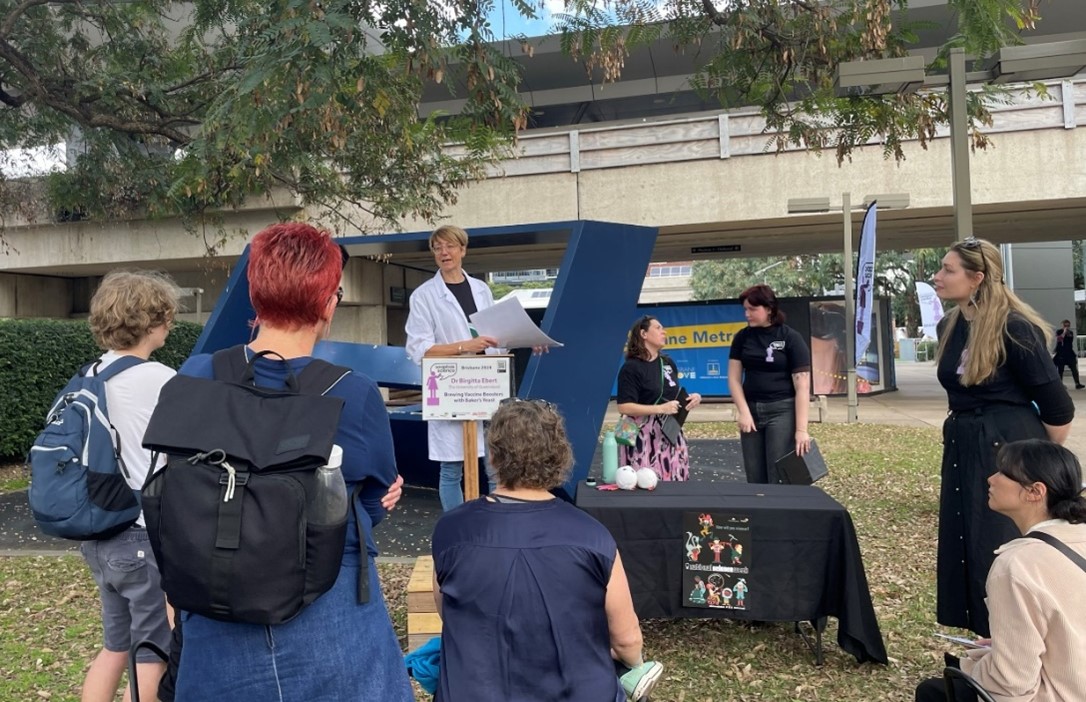 Matthew Doyle, environmental management student from the University of the Sunshine Coast.
During my placement, I visited several restoration sites along the Caboolture River, including Bellmere, Rocksberg and two sites along the Lower Caboolture River. My work involved vegetation assessments, research and reporting, and I also helped trial a new streambank assessment method that was still being developed.
At university, submitting a report usually marked the end of an assignment. At Healthy Land & Water, I started to understand how the work continues beyond that. Someone needs to return to the site, monitor and assess whether the restoration is progressing as expected. I enjoyed being involved in that process, learning from the team and hearing how they approached problems that didn't always have a straightforward answer.
Lower Caboolture River: Learning to monitor and adapt
Along the Lower Caboolture River, I visited two restoration sites where nature-based structures and vegetation were being used to help stabilise the riverbanks. Beyond managing erosion, these restoration works also aim to reduce sediment and excess nutrients entering the river, improve habitat for native wildlife and support the health of the wider ecosystem.
At one site, I observed boat wake, localised erosion and many young grey mangrove propagules beginning to establish. It reminded me of systems thinking, which I'd studied at university, and how human activity, natural processes and restoration works can influence one another.
At another site, I noticed a timber log installed to stabilise the riverbank appeared to have moved. I initially wondered whether this was a problem, but the team explained that some nature-based structures are designed to accommodate changes in the riverbank. This encouraged me to think about ecological resilience and how the surrounding riverbank and vegetation can respond to change and continue recovering.
I also contributed to a draft Adaptive Management Framework, linking monitoring indicators with potential management responses. I proposed a traffic-light system to identify conditions within expectations, those requiring further investigation and those needing specialist assessment.
Working on private land reinforced the importance of respecting landholders, while reviewing workplace health and safety requirements were part of preparing for each field visit. There were some lighter moments too, including a few curious cows that decided to follow us around the property.
Bellmere: Seeing restoration take hold
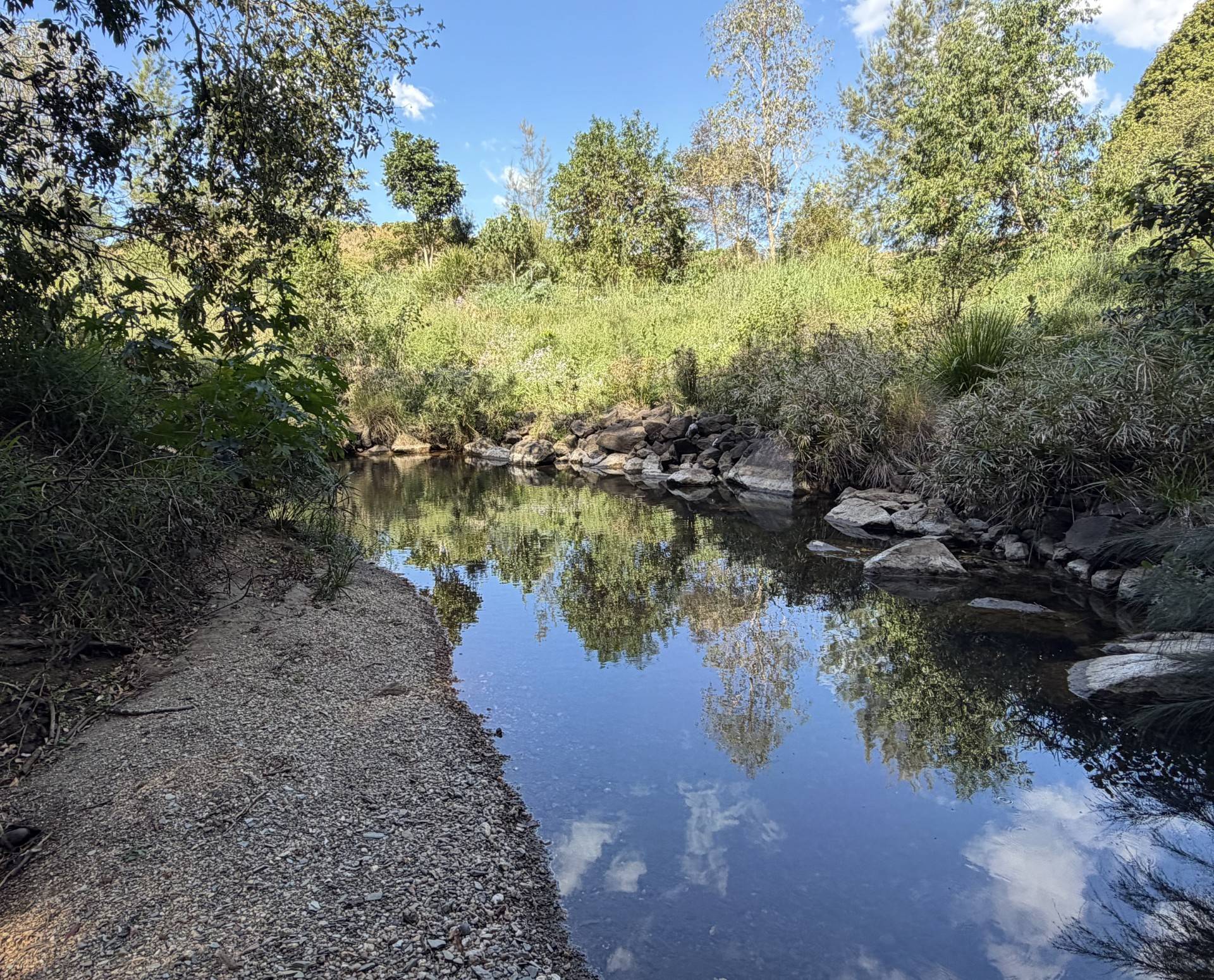 Bellmere River. Image captured by Matthew out in the field.
Bellmere was the most established of the restoration sites I visited, with revegetation work beginning in 2019. One of my main tasks was developing a draft Condition Monitoring Plan for the site. This involved researching its history, understanding the restoration goals and working out how changes in vegetation and riverbank conditions could be consistently recorded and compared over time.
After becoming familiar with Bellmere through the project documents, it was rewarding to finally visit and see the restoration work firsthand. I was surprised to see signs of natural recruitment, with native woody plants establishing on their own among the planted vegetation. Seeing this helped me better understand ecological succession and how the site could gradually develop a more complex vegetation structure towards its long-term goal of gallery rainforest.
I also hadn't realised how much the river's natural flow influenced the choice and placement of vegetation. During the visit, I learned how dense grasses were used to create a natural barrier along the downstream section of the riverbank, helping protect it from erosion during high-energy flows associated with storms and flooding.
A personal connection to Country
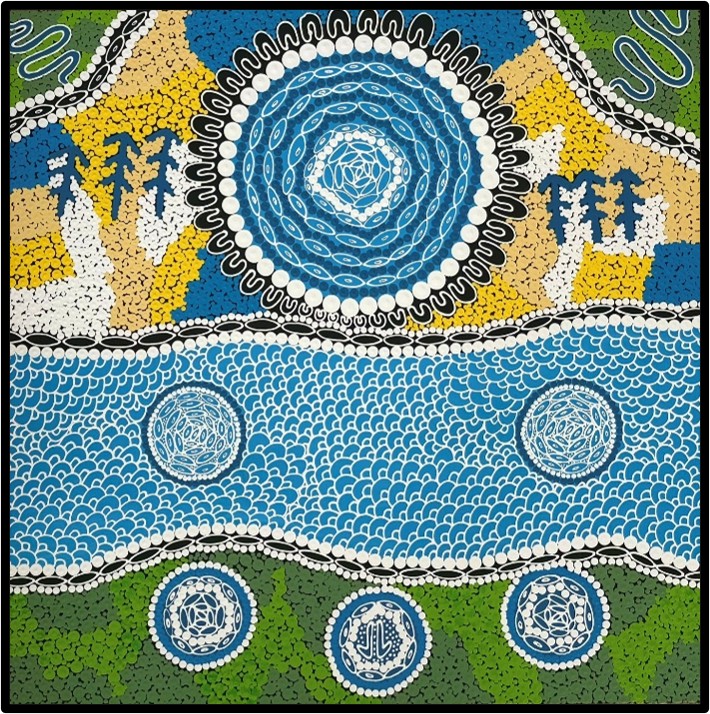 Artwork created by local Kabi Kabi and Butchulla artist, Zartisha Davis for a representation of Matthew's placement and experience on Country.
Spending time on Country along the Caboolture River and contributing to its restoration gave me a personal connection to the places I visited. When preparing my final presentation for Healthy Land & Water's end-of-month staff meeting, I wanted my Acknowledgement of Country to reflect that experience while recognising the Traditional Custodians and their ongoing care for Country. I reached out to Zartisha Davis, a local Kabi Kabi and Butchulla artist, who created an artwork inspired by my placement.
The artwork features the river and carpet pythons, with a large circle representing my connection to the experience and my contribution to the restoration work. I brought the artwork along and was really proud to share it with the team during my presentation. It's something I'll always treasure as a reminder of the places I visited and the people I had the opportunity to learn from.
Looking back
As I approach the end of my degree and prepare to begin a career in environmental management, I have a greater appreciation for the work that happens behind the scenes of environmental restoration. From fieldwork to research, planning and reporting, my placement showed me how much collaboration and ongoing effort goes into these projects.
One of the biggest lessons I'll take away is the importance of asking questions, learning from experienced professionals and understanding what the evidence is telling us. I've also come to appreciate that environmental management involves working alongside people just as much as it does working with the environment.
I'd like to thank Margie Dickson for her guidance and support throughout my placement, and everyone at Healthy Land & Water for making me feel so welcome. I appreciated meeting people from different teams, hearing about their work and learning from their experiences. Everyone was approachable and generous with their time, which made my placement even more enjoyable.
What started as a university field trip turned into an unexpected journey, giving me the chance to contribute to natural resource management in South East Queensland and work alongside people passionate about the environment. It's an experience I'll carry with me as I begin my career.


