
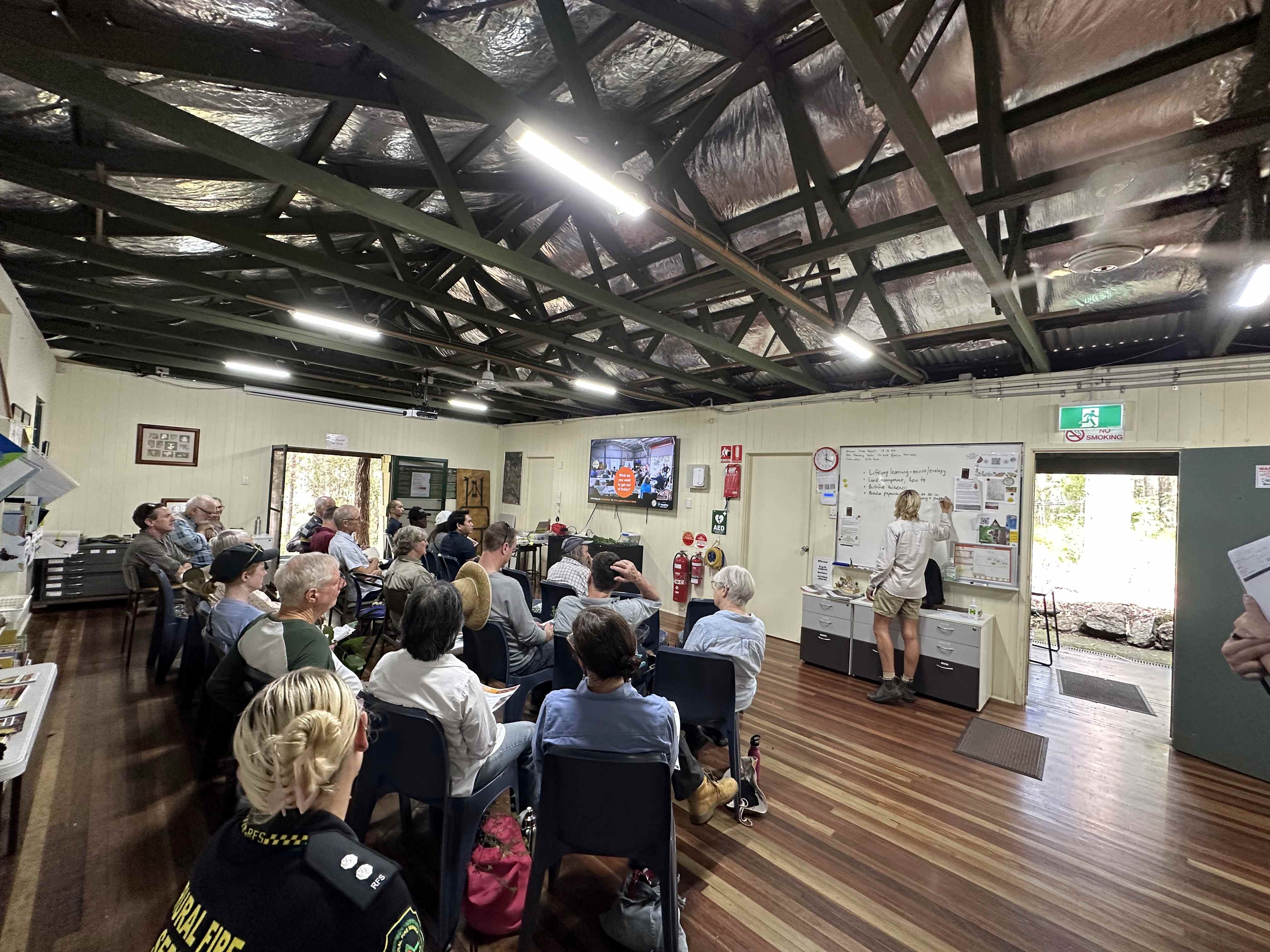
Evaluating the Effectiveness of Landholder Actions to reduce bushfire risk resulting from Community Engagement Workshops
Evaluating on-ground actions taken by recipients following participation in fire education and management community engagement programs
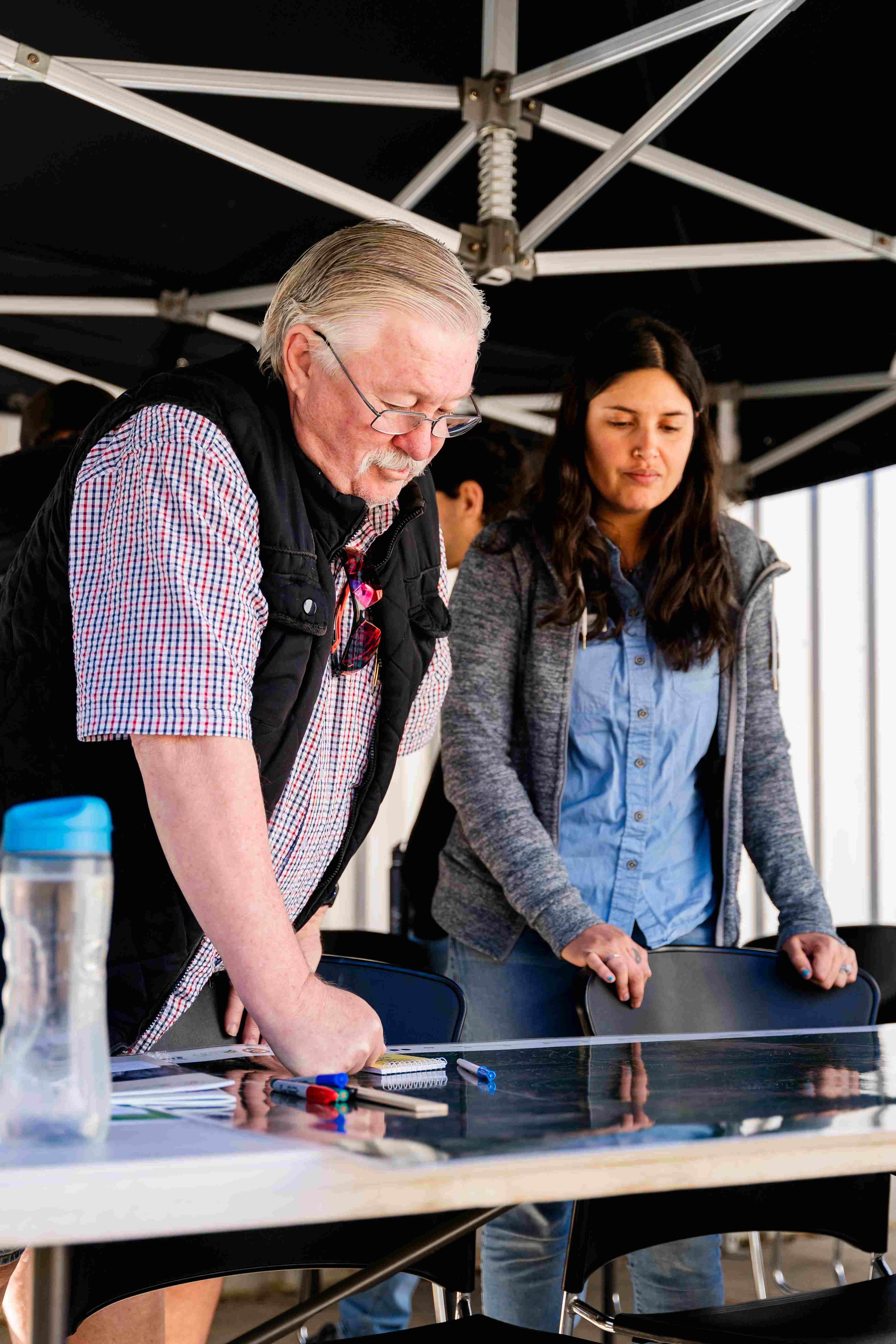 The popular Property Fire Management Planning workshops are a proactive way for landholders to plan for fire management actions on their own property using a tailored property map.Nature-based Solutions (NbS) have significant potential to reduce disaster risk and strengthen the resilience of communities, businesses and landscapes. This project assesses how on ground, nature based actions adopted by landholders contribute to bushfire risk reduction, ecosystem resilience and long term disaster preparedness.
This project evaluates the benefits of Nature-based Solutions implemented by landholders to improve fire resilience, following participation in community fire education and engagement programs, for example, Healthy Land & Water’s fire preparedness workshops.
In addition, the project seeks to identify barriers to implementing Nature-based Solutions, as well as the enabling factors that support landholders to translate knowledge into action. The project also considers how these actions influence individual landholders, community networks and the broader landscape.
What we are doing
This project will involve collaborative survey and interview work to understand the benefits of nature-based on-ground actions taken by landholders from environmental, economic, cultural, and social perspectives.
This project focuses on:
- Exploring the fire risk reduction and resilience benefits of Nature-based Solutions at both property and landscape scales.
- Understanding how landholders apply knowledge gained from workshops and identify enablers and barriers to implementation.
- Documenting the benefits of Nature-based Solutions from environmental, economic, cultural, and social perspectives.
- Considering how Healthy Land & Water’s community fire workshop approach could be scaled and these Nature-based Solutions translated to other areas, and to other NRM regions across the country.
Knowledge and understanding gained from this project will directly benefit landholders and communities by:
- Knowledge sharing and communication of the effectiveness of Nature-based Solutions with partners, targeted programs, stakeholders, and communities.
- Improving the delivery of education and capacity building workshops and activities of the Queensland Fire and Biodiversity Consortium, which in turn benefits those participants and their communities.
- Identifying potential opportunities to expand and scale nature-based fire resilience approaches into other NRM regions and across the country.
Measuring success
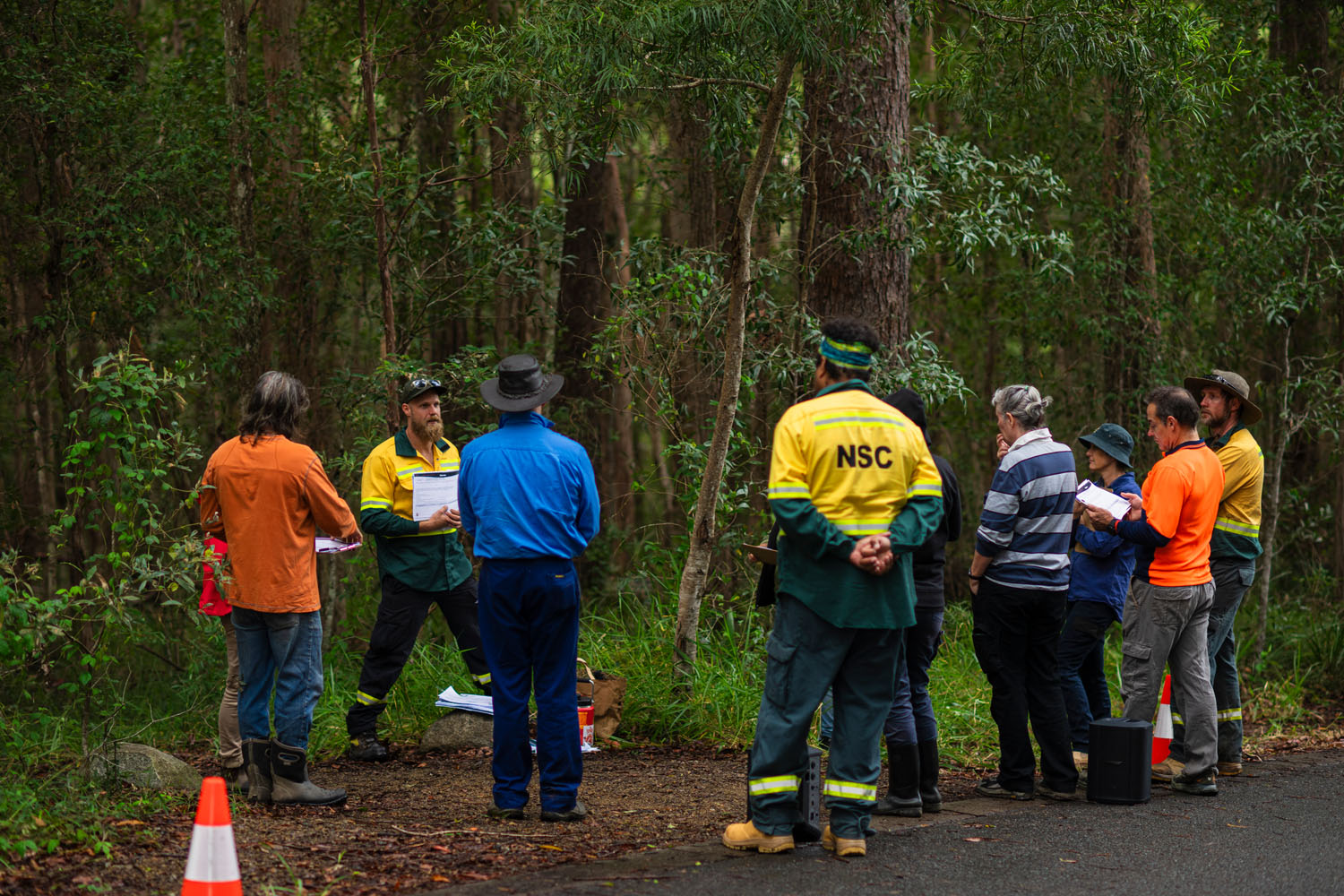 A How to Plan a Burn workshop is a collaboration with local councils and Rural Fire Services. Landholders gain practical advice and guidance on reducing bushfire risk in their specific landscape. Photo by Cameron Etchells.
The project will focus on evaluating the on-ground actions taken by participants at Healthy Land & Water workshops, including what actions were undertaken post-workshop and identification of any barriers encountered.
The emphasis will be on understanding the impact of Nature-based Solutions on risk and resilience, rather than solely on the effectiveness of the workshops.
- Enhanced disaster resilience: The project is expected to contribute to improved disaster resilience outcomes by improving understanding of how landholder engagement strategies influence the uptake of nature-based risk mitigation actions following workshop participation. While these nature-based actions may be indirectly measurable within the project’s timeframe, they are likely to contribute to reduced exposure to fire, flood and other climate-related risks for regional communities and local businesses.
- Ecosystem resilience: By promoting ecosystem resilience through effective bushfire education workshop models, the project will support biodiversity, native vegetation, soil health and water quality improvements. Importantly, these benefits will help demonstrate to landholders how to balance land management requirements with biodiversity values and contribute to the long-term sustainability of the landscape.
- Community capacity building: The project will foster community capacity building and strengthen networks, enhancing disaster preparedness and supporting more rapid recovery in the face of future disasters. This will contribute to more resilient and connected communities.
Why this project is important
|
This project contributes to the long-term vision of strengthening community resilience and preparedness to climate and disaster risks through active participation and implementation of Nature-based Solutions. It aims to demonstrate how community-centred education can enable landholders to implement effective Nature-based Solutions for fire management, ecosystem resilience, and disaster risk reduction. By directly engaging with workshop participants and documenting their experiences, the project centres landholder voices and practical barriers to action. The findings will inform how similar community engagement approaches can be adapted and implemented in other regions across Australia, contributing to long-term community capacity building and strengthened disaster preparedness across South East Queensland and beyond. |
Project snapshot
| Project name: |
Evaluating the Effectiveness of Landholder Actions to reduce bushfire risk resulting from Community Engagement Workshops (2026) |
| Project manager: | Michael Castiglione, Healthy Land & Water |
| Partnerships: |
This project is being delivered in collaboration with NRM Regions Australia with the support of the Minderoo Foundation and in partnership with Griffith University. |
Project collaborators
This project is being delivered in collaboration with NRM Regions Australia with the support of the Minderoo Foundation and in partnership with Griffith University.
Learn more about the national Nature-Led Resilience Project.
 |

Level 11, 240 Queen St, GPO Box 735
Meanjin (Brisbane) QLD 4001, Australia
Monday - Friday 8.30am - 5.00pm
Healthy Land & Water Ltd ABN 91 115 662 989
About Us
What's on
Our Impact
Contact us
Phone: (07) 3177 9100
Email: info@hlw.org.au
We acknowledge that the place we now live has been nurtured by the Traditional Custodians of this Country for tens of thousands of years, and that their physical, cultural and spiritual custodianship of our land, water and skies is ongoing.

