
The power of partnership: protecting our waterways together
When it comes to protecting South East Queensland’s waterways, no single organisation can do it alone.
Across the North Pine catchment, a partnership between Healthy Land & Water and the Pine Rivers Catchment Association (PRCA) is bringing together technical expertise, local knowledge and long-standing community relationships to deliver meaningful environmental outcomes.
And at the heart of it all? People.
A shared goal for healthy waterways
The Seqwater-funded North Pine Source Water Protection Program focuses on improving water quality by addressing issues such as erosion, degraded streambanks and land management practices.
On the ground, this can look like:
- Stabilising gullies and creek banks.
- Restoring riparian vegetation.
- Supporting sustainable agriculture practices.
In this program, Healthy Land & Water leads on-ground works delivery, while PRCA plays a critical role in connecting with local landholders – ensuring the right people are involved, informed and engaged.
It’s a partnership built on complementary strengths.
“We both bring different things to the table,” says PRCA Project Officer Louise (Lou) Klatte. “Healthy Land & Water has the technical expertise and resources, and we bring the relationships and local knowledge. It’s a really balanced collaboration.”
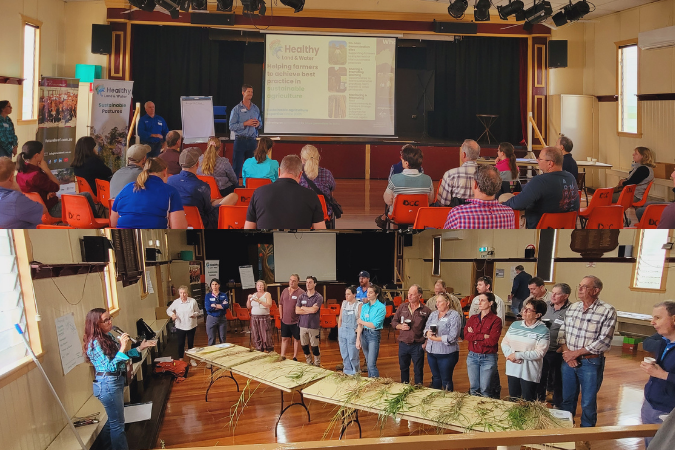 Healthy Land & Water hosting a Sown Pastures workshop for landholders in the North Pine catchment.
Local connection make all the difference
PRCA has been part of the Pine Rivers community for more than 30 years. Over that time, they’ve built strong, trusted relationships with landholders – something that can’t be fast-tracked.
That trust is essential when it comes to working on private properties.
“Landholders need to feel comfortable and confident before they agree to anything,” says Project Officer Ianuk (Nuk) Athien-Hayes. “We’re often the middle ground – we already have that relationship, so we can introduce them to the broader project team.”
Rather than formal outreach strategies, engagement often happens through everyday conversations and existing networks.
“It really is word of mouth,” Lou says. “Conversations happen everywhere including at the local pub. You sit down, have a chat, and before you know it someone’s saying, ‘you should talk to my neighbour down the road.’ That’s how it grows.”
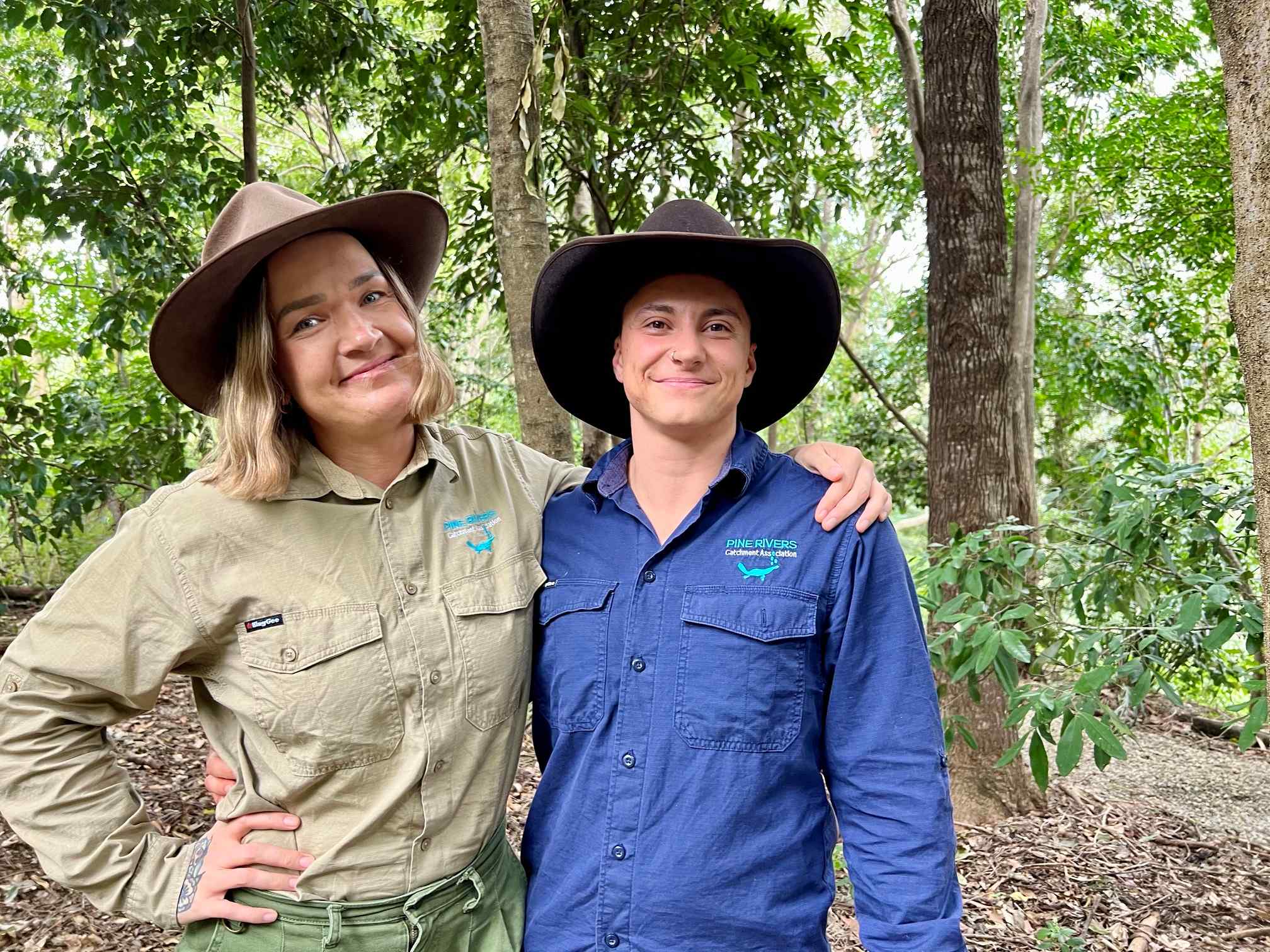 Lou and Nuk from PRCA.
Building trust, one conversation at a time
Discussing practice changes with landholders is a journey. It is important to understand landholders’ perspective, local knowledge and hesitations.
That’s where trust-building becomes just as important as technical expertise.
“Sometimes people are hesitant,” Nuk says. “They want to see that something works before they commit. It’s about showing, not just telling.”
PRCA works closely with landholders to guide those conversations, taking the time to understand their concerns and long-term goals.
“We often ask, ‘what do you want this property to look like in 100 years?’” says Louise. “That helps shift the conversation from the here and now to something bigger, and what they want to leave behind.”
It’s a simple question, but one that can spark a powerful change in perspective.
A long-term approach to change
Unlike quick-win projects, environmental restoration requires patience.
“It’s the longest of long games,” Lou says. “You might start with something small, and once people see that it works, they’re more open to doing more.”
That gradual approach helps landholders feel more in control and more invested in the outcome.
Rather than simply delivering works, the project encourages participation – whether that’s helping prepare areas, maintaining vegetation or contributing time and effort on-site.
“It’s important that landholders are involved in creating something and feel part of the process,” Lou explains.
Connecting the dots: from land to water
One of the biggest challenges is helping people understand the broader impact of what happens on their land.
“At the end of the day, it’s about protecting the water we all rely on,” Nuk says. “But if you just say, ‘source water protection’, it doesn’t always mean much.”
Instead, conversations are kept simple and practical, focusing on clear links between land use and water quality.
“It’s about helping people see how everything connects,” Lou adds. “What happens on one property doesn’t just stay there – it flows through the whole catchment.”
By taking that bigger-picture view, landholders can see how their actions contribute to outcomes far beyond their property boundaries.
Stronger outcomes through collaboration
The partnership approach has also strengthened the capacity of both organisations.
Through working together, PRCA has been able to expand into new areas such as sustainable agriculture, while Healthy Land & Water benefits from deeper local engagement and improved access to landholders.
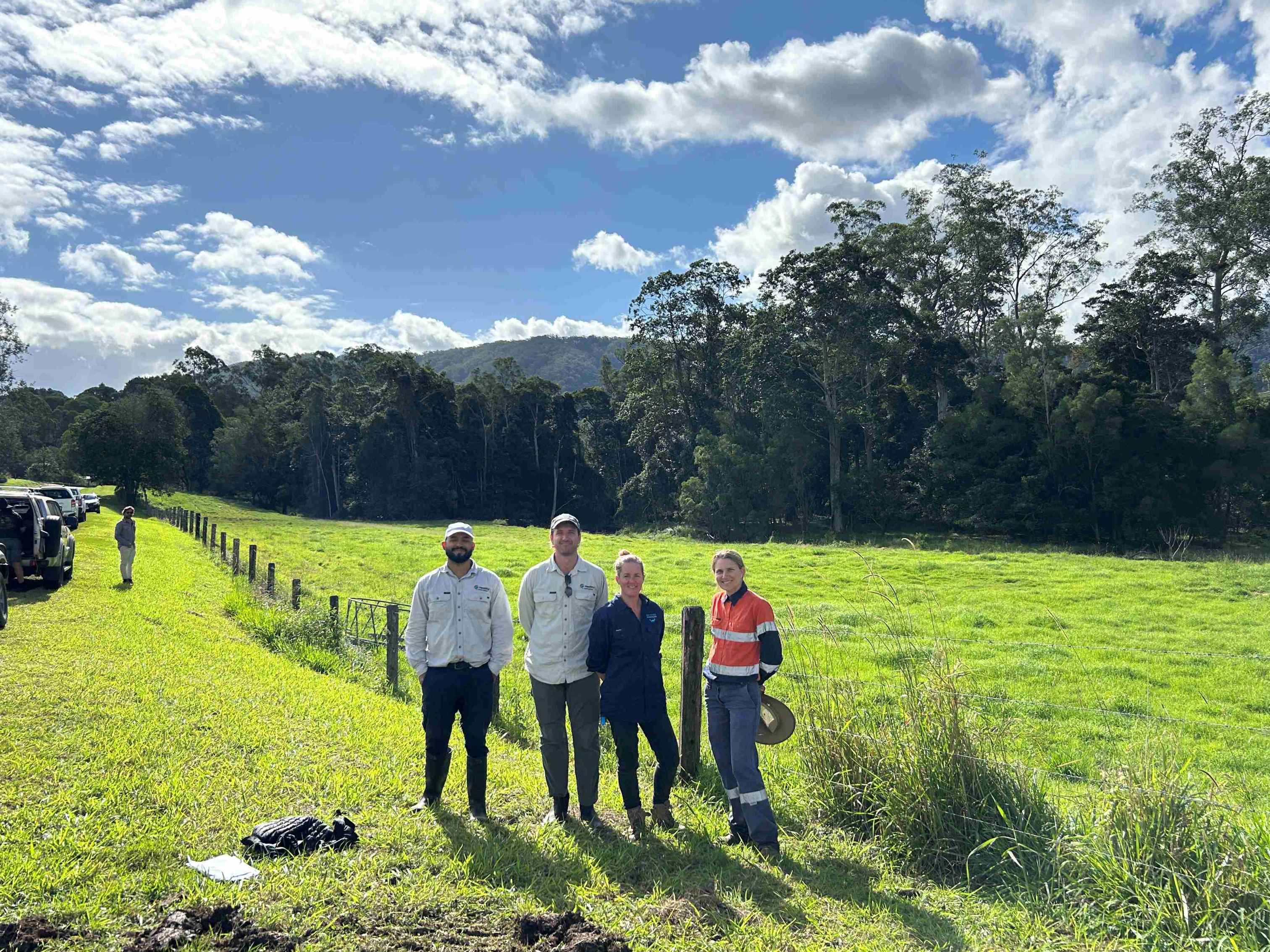
 Project team Arthur Barreto, Jayden Lee-Williams from Healthy Land & Water, Catherine Rivard, Operations Manager from PRCA, and Vanessa Durand, Project Engineer from Healthy Land & Water.
“It goes both ways,” Nuk says. “We learn from each other, and that makes the projects stronger.”
Importantly, landholders see that collaboration in action.
“There’s no stepping on toes, no competition,” Lou says. “It’s clear that everyone is working towards the same goal.”
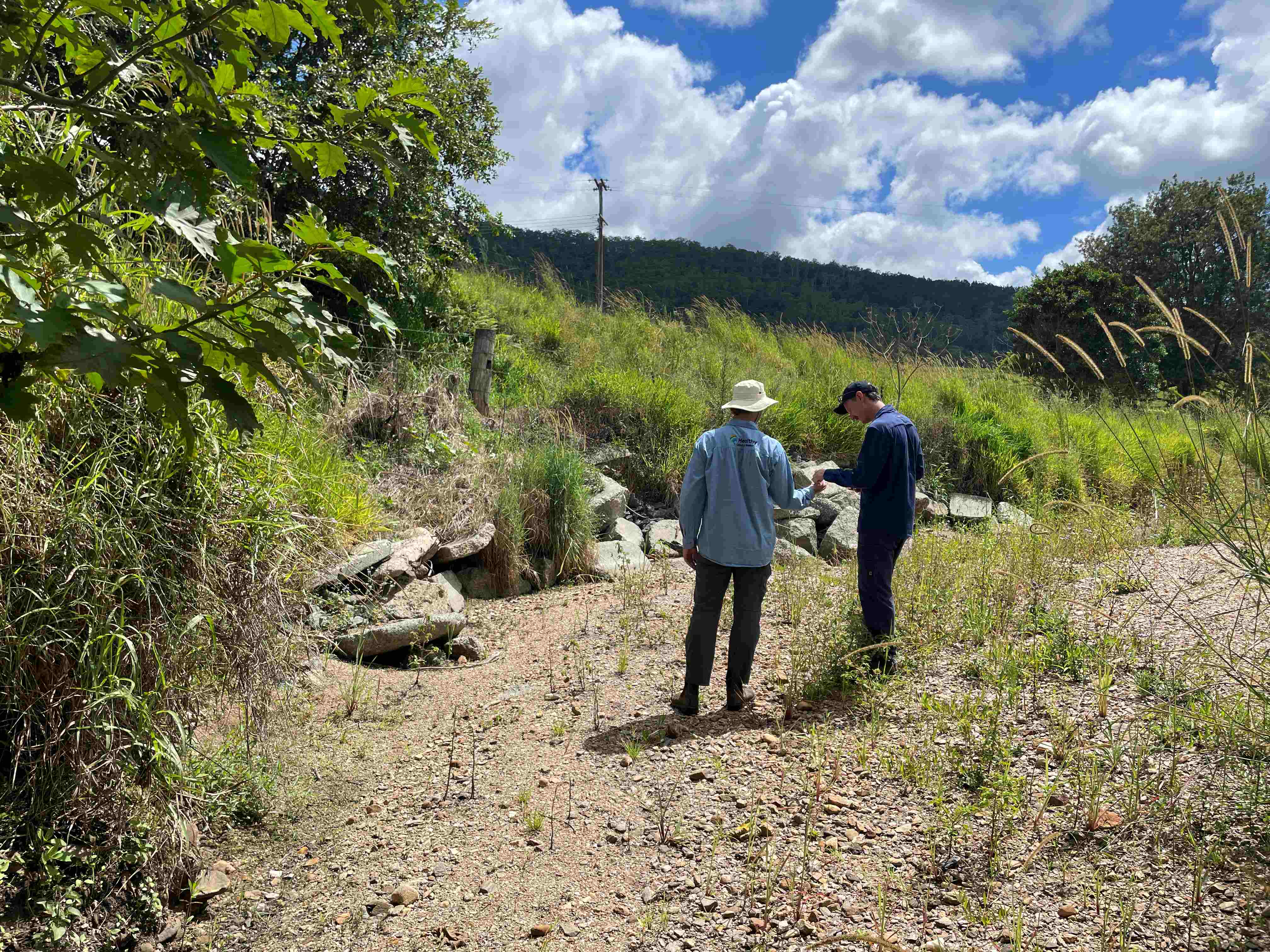 The positive collaboration between Healthy Land & Water and PRCA team members has been an added bonus for this project.
Looking ahead
With around 35–40 properties already engaged in the program, the work across the North Pine catchment continues to grow.
But beyond the numbers, the success of the project is also measured in relationships: the conversations started, the trust built, and the shared commitment to protecting the region’s waterways.
Because when it comes to environmental change, it’s not just about what gets done - it’s about how it’s done.
And as this partnership shows, the most powerful outcomes happen when people work together.
This project is supported by Healthy Land & Water, through funding from Seqwater and runs in partnership with Pine Rivers Catchment Association.


