
Threatened Species Resilience Program
Improving habitat resilience and reducing key threats to vulnerable wildlife species in South East Queensland
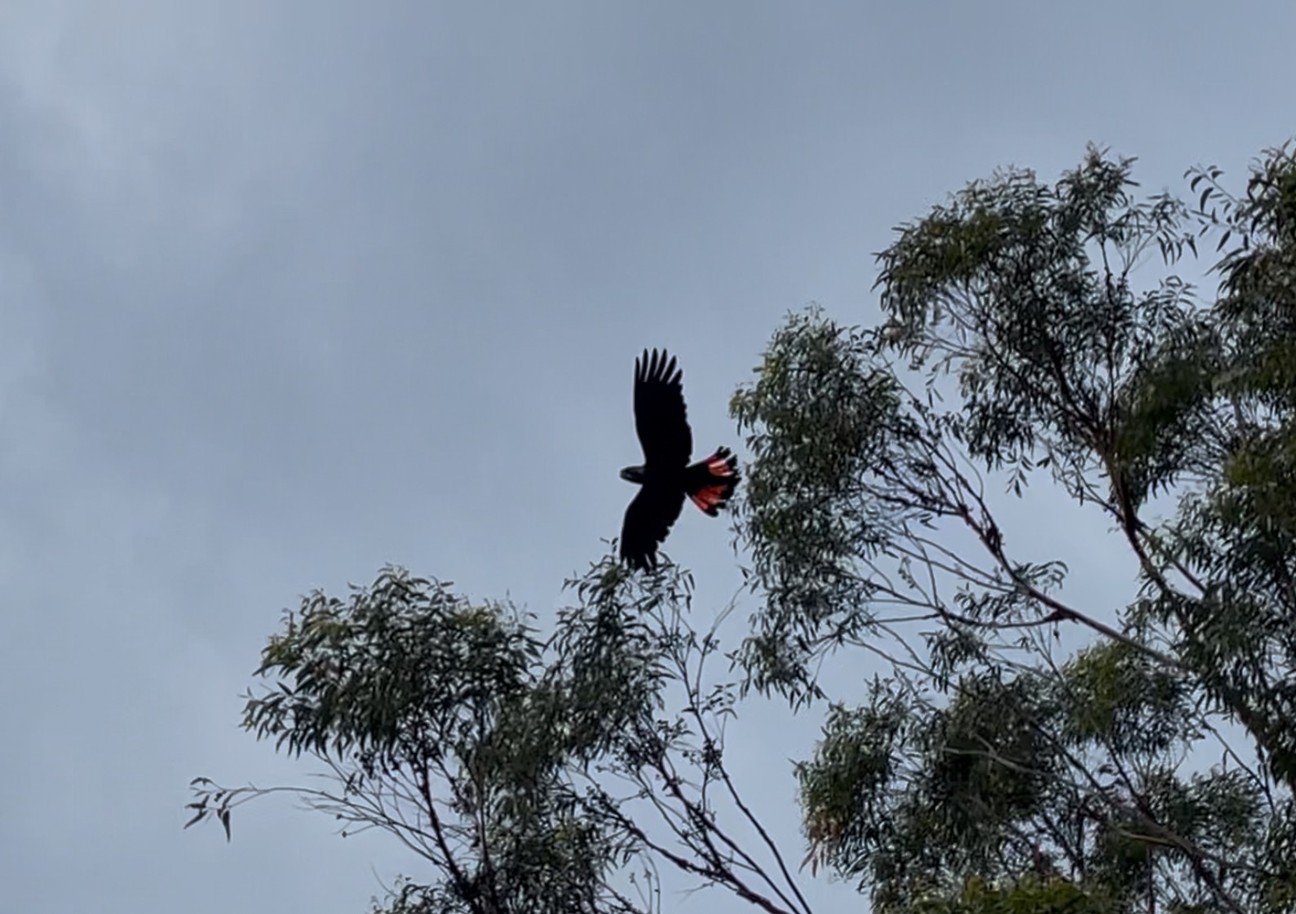
 Female Glossy Black-Cockatoo on the left, juvenile male on the right. Image by Wayne Taylor, Healthy Land & Water.
The Threatened Species Resilience Program improves habitat resilience and reduces key threats to vulnerable wildlife species, including the koala, Brush-tailed Rock-wallaby, Glossy Black-Cockatoo and Greater Glider in South East Queensland by undertaking threat reduction activities and improved fire management strategies across 3,250 hectares of habitat adjacent to Main Range National Park.
What we are doing
- Weed management across 12 hectares of threatened species habitat to reduce barriers to species movement and improve habitat condition.
- Development and implementation of a comprehensive fire management plan covering 3,250 hectares, supported by field data collection and camera trap monitoring to evaluate fire management effectiveness.
- Fox control program across 3,250 hectares using scent detection dog surveys and targeted fumigation of fox dens to reduce predation threats.
- Installation of species-specific habitat refugia and watering points with ongoing monitoring to increase protection from direct threats during drought and extreme weather events.
Measuring success  South East Queensland koala. Image by Indigo Kuss-Patterson, Healthy Land & Water.
This project will deliver:
Improved condition of 12 hectares of threatened species habitat through targeted weed control and vegetation management.
Enhanced habitat quality across 3,250 hectares through development and implementation of a tailored fire management plan informed by field data and monitoring.
Reduced fox predation threat across 3,250 hectares through systematic detection and control activities.
Increased availability of refugia and water sources for threatened species through the installation of at least 10 species-specific refugia and 2 watering points.
On-ground actions:
- Weed control and vegetation management.
- Fire management planning and implementation.
- Pest control (i.e. feral foxes).
- Habitat infrastructure installation (refugia and watering points).
- Camera trap monitoring and data collection.
Why this project is important
|
Threatened species in South East Queensland face multiple environmental pressures, including habitat loss, fragmentation, predation by introduced species, inappropriate fire regimes, and climate change impacts. The four target species for this project, Koala, Brush-tailed Rock-wallaby, Glossy Black Cockatoo, and Greater Glider, are all listed as vulnerable or endangered under state and federal legislation. The habitat adjacent to Main Range National Park provides critical refuge for these species but requires active management to reduce threats and improve habitat quality. Invasive weeds restrict species movement, inappropriate fire regimes degrade habitat, fox predation impacts vulnerable populations, and a lack of refugia and water sources during extreme weather events threatens species survival. This integrated threat management approach addresses multiple pressures simultaneously, providing the best opportunity to improve habitat resilience and support the long-term viability of threatened species populations in the region. |
Project snapshot
| Project name: | Threatened Species Resilience (2025-2026) |
| Project manager: | Leonard Ainsworth, Healthy Land & Water |
| Catchment: | South East Queensland |
| Funders/Partnerships: |
This project is funded by the Queensland Government’s Natural Resource Management Expansion Program. The project is delivered by Healthy Land & Water in partnership with South-East Queensland local governments, community groups, and private landholders, and aligns with the NRM Expansion Program Logic & Indicators Framework, NRM Regions QLD Plan 2024-2028, SEQ Natural Resource Management Plan 2021–2041, Queensland Biodiversity Conservation Strategy, Queensland Climate Adaptation Strategy, Queensland Matters of State Environmental Significance (MSES), Shaping SEQ 2023, and local council environmental objectives. |
Project collaborators
This project is funded by the Queensland Government’s Natural Resource Management Expansion Program.

The project is delivered by Healthy Land & Water in partnership with South-East Queensland local governments, community groups, and private landholders, and aligns with the NRM Expansion Program Logic & Indicators Framework, NRM Regions QLD Plan 2024-2028, SEQ Natural Resource Management Plan 2021–2041, Queensland Biodiversity Conservation Strategy, Queensland Climate Adaptation Strategy, Queensland Matters of State Environmental Significance (MSES), Shaping SEQ 2023, and local council environmental objectives.

Level 11, 240 Queen St, GPO Box 735
Meanjin (Brisbane) QLD 4001, Australia
Monday - Friday 8.30am - 5.00pm
Healthy Land & Water Ltd ABN 91 115 662 989
About Us
What's on
Our Impact
Contact us
Phone: (07) 3177 9100
Email: info@hlw.org.au
We acknowledge that the place we now live has been nurtured by the Traditional Custodians of this Country for tens of thousands of years, and that their physical, cultural and spiritual custodianship of our land, water and skies is ongoing.

