
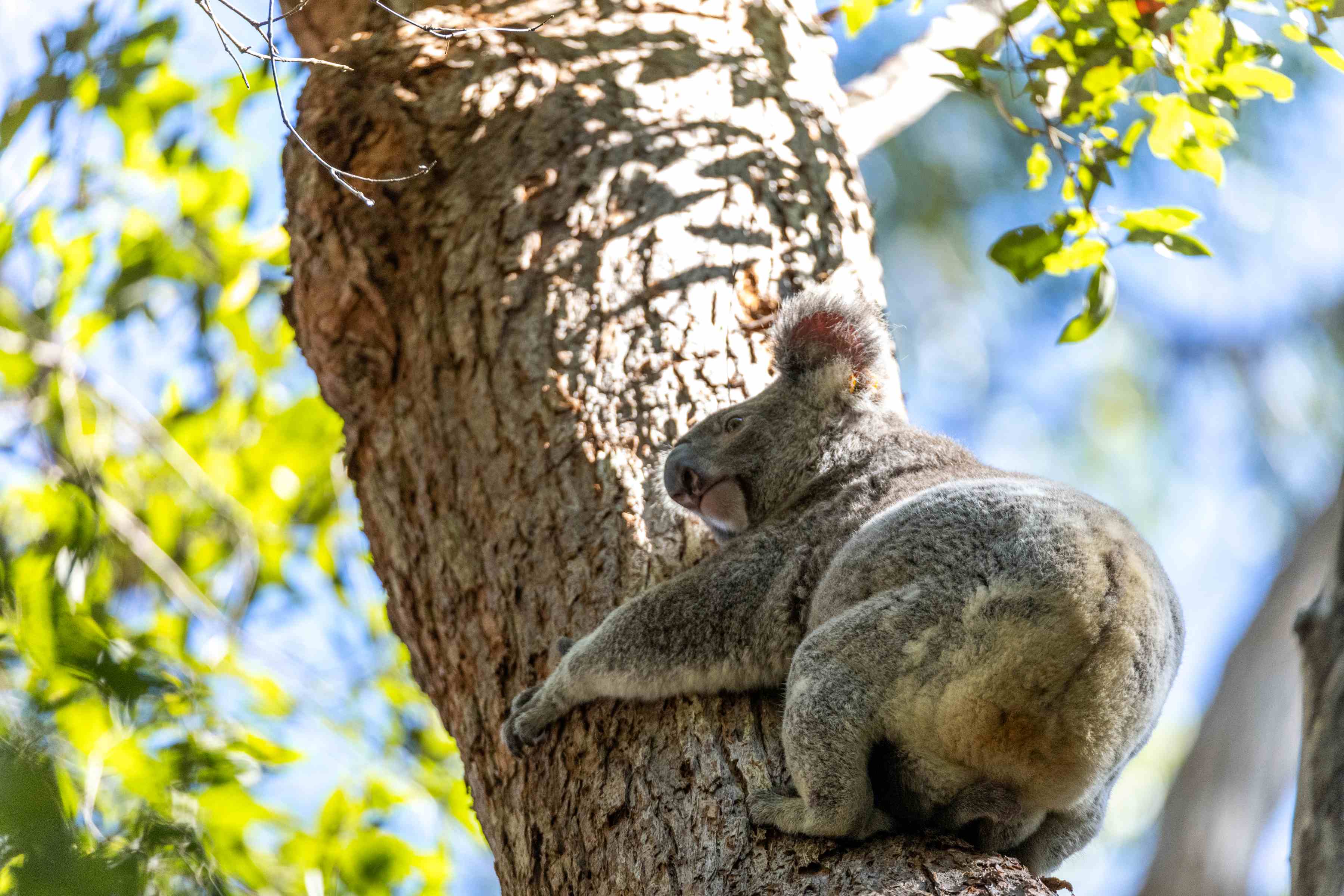
Checking in on the Koala Threat Management Initiative Program: Reducing chlamydia risk in SEQ’s wild populations
Our team recently kicked off the Reducing the Threat of Chlamydia in SEQ’s Wild Koalas program, a $1.9 million initiative dedicated to safeguarding South East Queensland’s (SEQ) koalas from chlamydiosis, which is recognised as one of the highest threats to their survival.
Chlamydia can cause significant suffering in koalas, resulting in pain, blindness, infertility, incontinence, and death. By identifying and treating sick koalas, this program aims to improve their welfare, with the goal of enhancing both survival and reproductive rates across targeted populations.
This work is a sub-program of the larger SEQ Koala Threat Management Initiatives (KTMI), funded by the Queensland Government Department of Environment, Tourism, Science and Innovation (DETSI), and is a collaboration between Healthy Land & Water, research partners, local councils, wildlife hospitals, and veterinary experts.
We’re halfway through this program, with koala captures for the first year completed across nine councils, so it is the perfect time to check-in on how the program is progressing.
Fieldwork in action
Since the program’s launch, field teams have been actively surveying and assessing koala populations across nine local government areas:
- Noosa
- Sunshine Coast
- Logan
- Redlands
- Somerset
- Ipswich
- Lockyer Valley
- Brisbane
- Gold Coast
Thermal drone imaging is used to detect koalas using their body heat signatures, and ground trapping and climb-and-flag techniques are used to catch koalas across a diverse landscape so that koalas can receive detailed health assessments and treatment, if required. These techniques have allowed the field teams to successfully capture and assess close to 150 koalas since the first capture in June 2025.
These koalas are now under active monitoring – each monitoring event helping to reduce disease risk and inform future conservation strategies.
Thermal drone surveys and ground trapping
Where possible, a small drone team head out after sundown the day before active catching days, or early morning on the day of catching.
They use minimally invasive live-feed thermal drone imaging to locate koalas. In some instances, specially trained dogs and their handlers head out the day after drone surveys alongside the catching team to drone detection points to collect koala scats and assess capture opportunities.
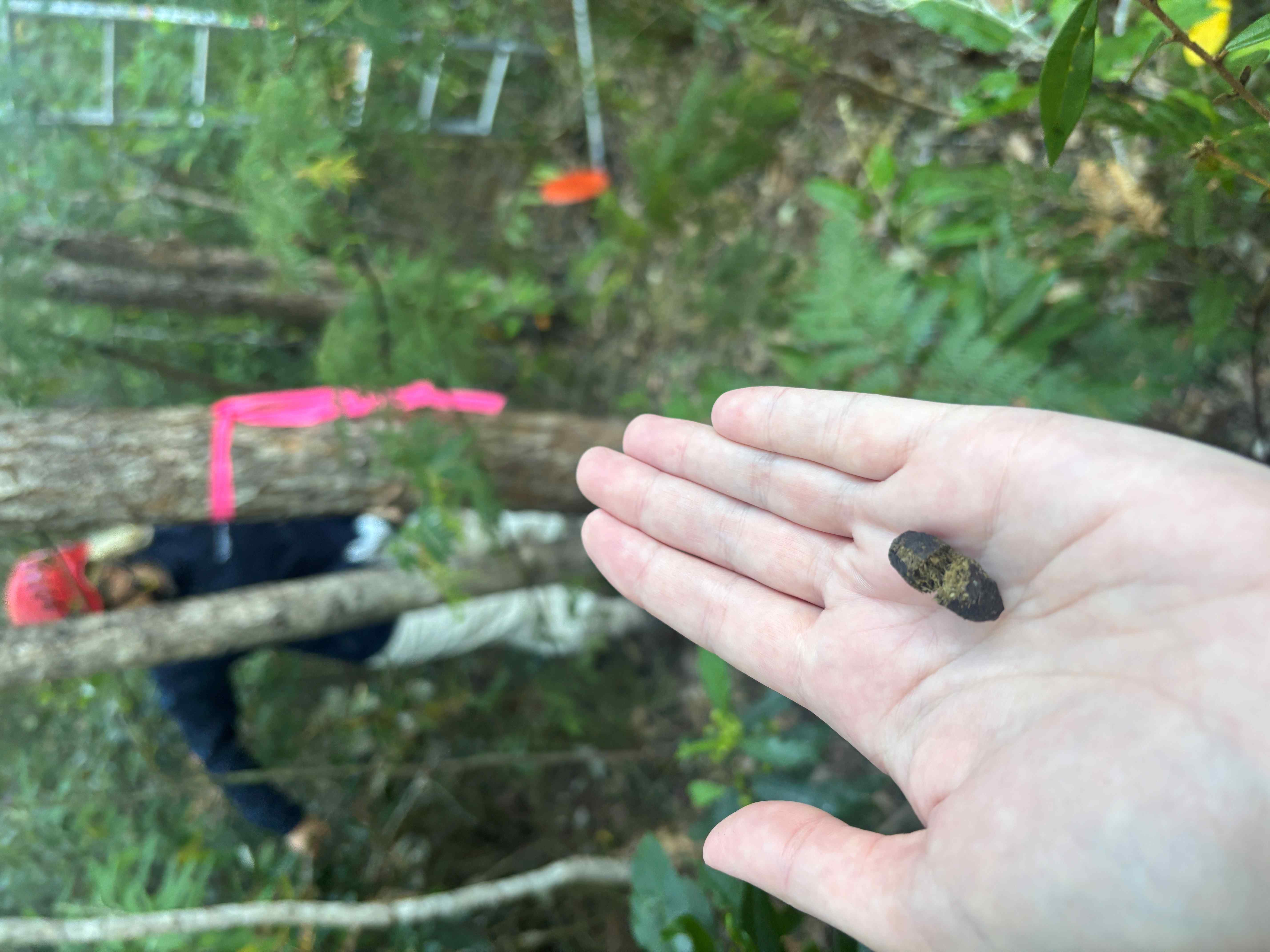 How do you find a koala high up in a tree? You look for its poop at the base, of course!
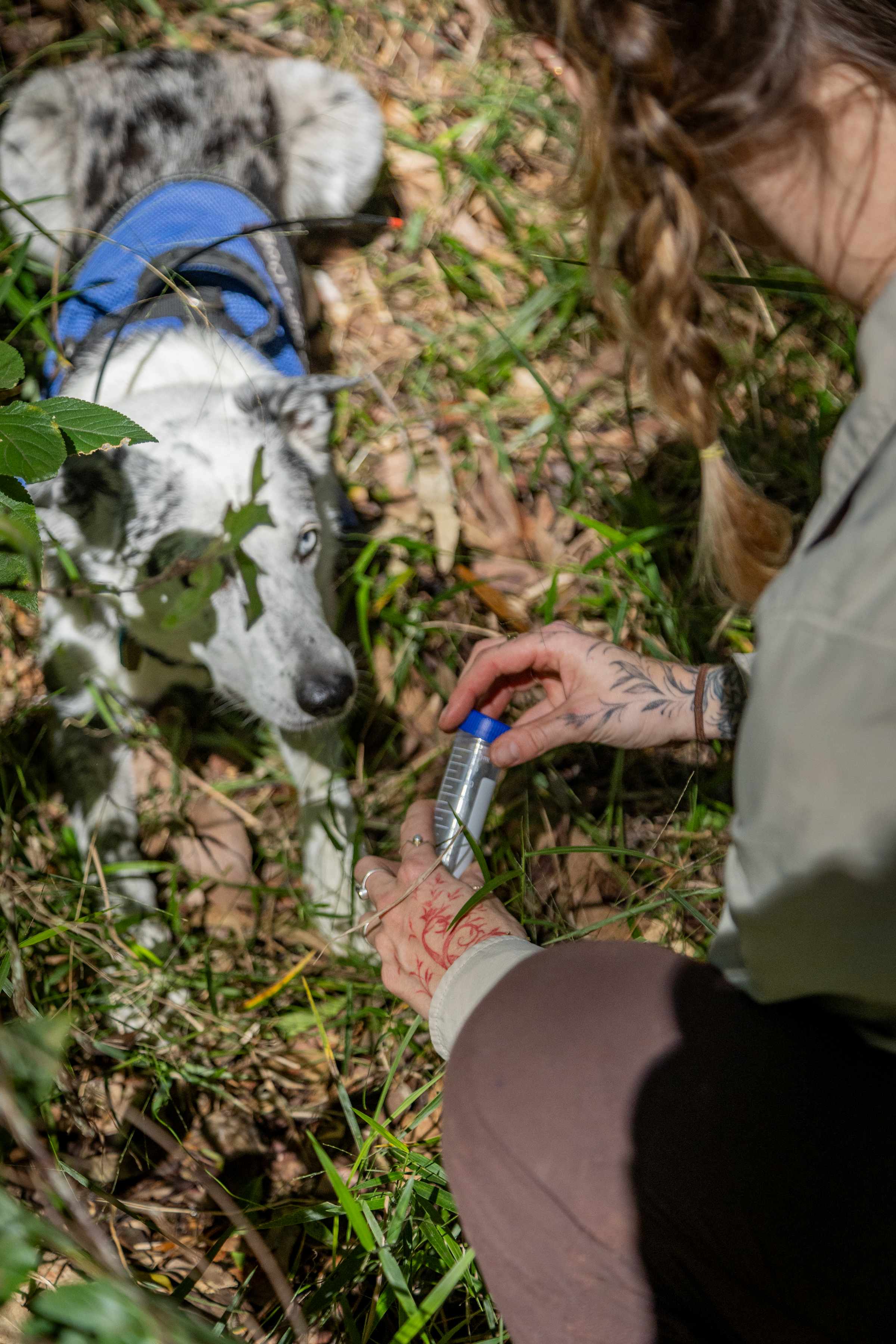 Skilled detection dogs such as Bear from UniSC Detection Dogs for Conservation are trained to seek out koala scat to help study koalas. Photo credit: Josquared Photography.
The team ventures deep into the bush to locate these koalas, carrying specially designed traps that are set up around the base of the koala’s host tree. When the koala comes down to move to a new feed tree, it naturally enters the trap, which then closes automatically. A sensor camera facing the trap sends an immediate alert to the field team so they can promptly and safely retrieve the koala.
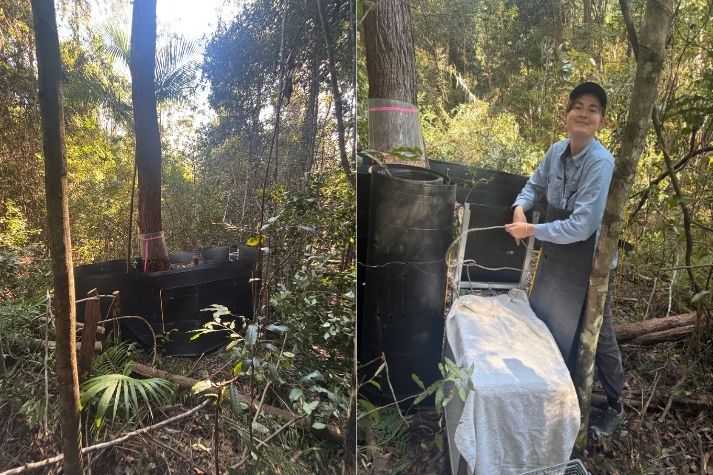 Environmental Project Manager, Indigo-Kuss Patterson setting up a specially designed trap to safely capture a koala.
Climb and flag techniques
Sometimes koalas need a little bit of encouragement to come down from their resting places. In daylight hours, a ‘climb-and-flag’ technique can be used to catch koalas that weren’t trapped.
Employing two distinct capture methods enhances the overall catch rate by providing the team with additional opportunities for successful capture.
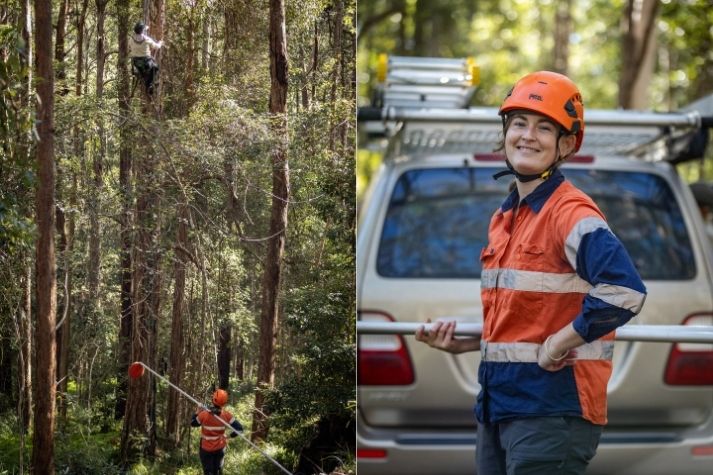 Environmental Project Manager, Indigo Kuss-Patterson lending a helping hand for the climb-and-flag technique. Photo credit: Josquared Photography.
Once safely captured, koalas are transported in purpose-built cages and given some tasty leaves for the journey back to the field vet clinic where they are given a full health assessment.
All captures are conducted by qualified wildlife professionals using established and ethically approved protocols, as endorsed by Animal Ethics Committees. These procedures are designed to minimise stress and prioritise koala safety.
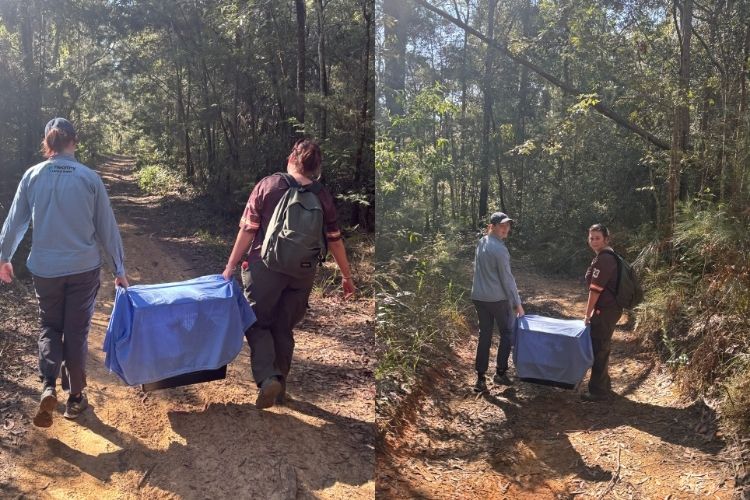 Heading back to the mobile vet clinic for a check-up.
Health assessments and treatments
You can’t always tell if a koala is sick just by looking at it. Sometimes the illness will spread internally affecting the animal’s reproductive tract, which can only be detected by conducting an ultrasound.
If a koala is given a clean bill of health, it is released back into the wild at their point of capture. In the Brisbane and Gold Coast programs, a vaccine is administered to the koalas before release to try to reduce the likelihood of future chlamydial infection. If they are sick or injured, they are transported to the nearest wildlife hospital for treatment.
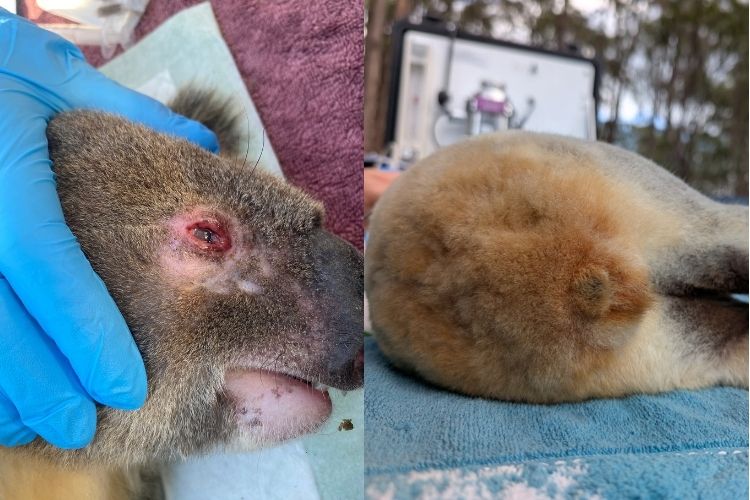 The sad reality of chlamydial disease in koalas which includes debilitating symptoms such as conjunctivitis, which can lead to blindness and cystitis (note the stained rump) which can lead to permanent infertility.
 Utmost care is given to koalas including giving them cool packs to keep their temperature stable.
The program's primary goal is to improve koala health outcomes through intervention before conditions reach advanced stages. In some cases, veterinary professionals may identify koalas with advanced chlamydial disease or other severe health conditions that cause significant suffering and are beyond effective treatment. In these situations, veterinary experts may recommend humane end-of-life care as the most compassionate option.
These difficult decisions are made only by qualified wildlife veterinarians following thorough health assessments, with the individual koala’s welfare and quality of life always guiding the process.
It’s a sad but powerful reminder of the harsh realities koalas are facing.
 It’s truly a rewarding experience for the koala team when a koala is given a clean bill of health and can be returned to the wild. Photo credit: Josquared Photography
Monitoring for long-term impact
Healthy koalas are fitted with a tracking radio ear tag before being released back into the wild and are tracked intermittently by the responsible team. The tags allow koalas to be tracked for booster vaccinations (in the Gold Coast and Brisbane programs) or for future recapture and follow-up health assessments across the other program areas.
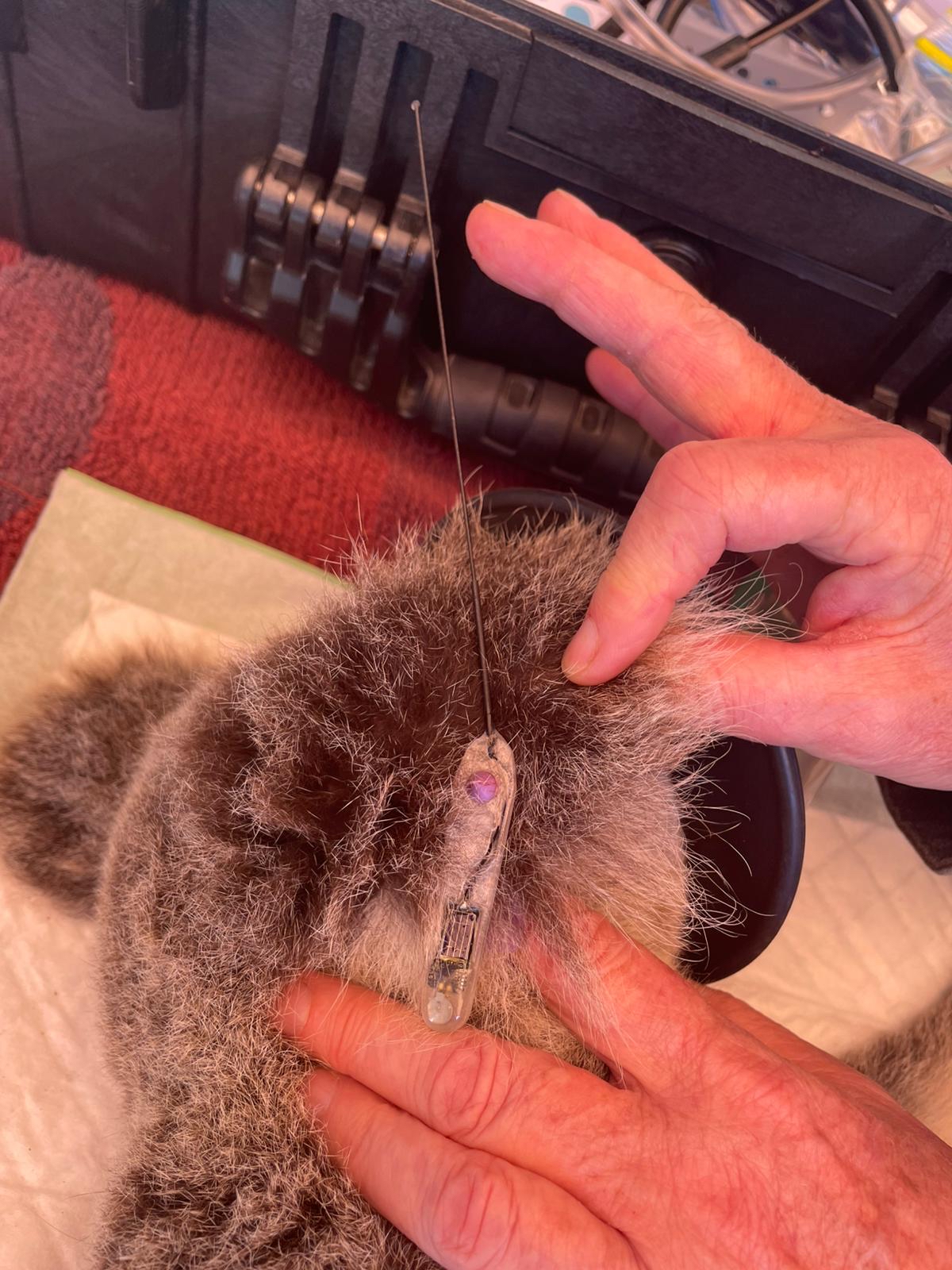 Tracking radio ear tags allow koalas to be tracked for booster vaccinations.
99 koalas (83 adults and 16 joeys) have been captured across Logan, Sunshine Coast, Noosa, Somerset, Redlands, Lockyer Valley and Ipswich in partnership with Detection Dogs for Conservation and veterinary consultant Wild Animal Solutions. On average, 59% of all koalas caught across these local government areas were diseased.
Six koalas have been captured under the Brisbane program with Wattle Ecology and Veterinary Services, with a chlamydia infection rate of 50%. Due to low population numbers and infertility due to disease, six healthy koalas have been translocated to the site to enhance population health and reproductive potential. The translocated koalas and all examined resident koalas have been vaccinated.
35 koalas (30 adults and five joeys) have been captured under the Gold Coast program with Currumbin Wildlife Hospital and City of Gold Coast, in partnership with Detection Dogs for Conservation and the University of Queensland. The rate of chlamydial disease within this population is 40%, with 22 adults and all five joeys vaccinated and released to date.
Many sick koalas have been identified at each location and suitable candidates have been treated and released with monitoring.
 When a koala is caught, information is captured for each koala including the date, time, latitude and longitude, a drone identification number. They are also given a unique name.
Why is this work so important?
In Queensland, the highest numbers of koalas are thought to be in SEQ. Koalas were first listed as vulnerable in this region under the Nature Conservation Act 1992 in 2005. This status was expanded statewide in 2015, and in 2022, koalas were officially listed as Endangered under both Queensland’s NC Act and the national Environment Protection and Biodiversity Conservation (EPBC) Act.
Koalas in SEQ face multiple, compounding threats—including habitat loss, high-intensity bushfires, climate change, disease, and vehicle strike. These threats often overlap, increasing vulnerability and reducing population resilience.
Strategic threat management and habitat protection (and if not, restoration) are essential to safeguard koalas in SEQ. By reducing disease, restoring habitat corridors, and engaging communities, we can help ensure the long-term survival of this endangered species.
 Just a few of the reasons why this work is so important. Photo credit: Josquared Photography
This initiative marks a major milestone in koala conservation – being the first koala disease management initiative of this magnitude or scope across South East Queensland to date, harnessing cutting-edge technology, expert care, and collaborative research to protect one of Australia’s most iconic species. Stay tuned for updates as the program evolves.
The SEQ Koala Threat Management Initiatives Program is funded by the Queensland Government Department of Environment, Science and Innovation, and run in collaboration with Local Governments, the SEQ Wildlife Hospital Network, researchers, Traditional Owners, and community groups.
Cover photo credit: Josquared Photography


